
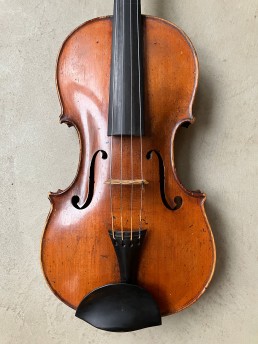
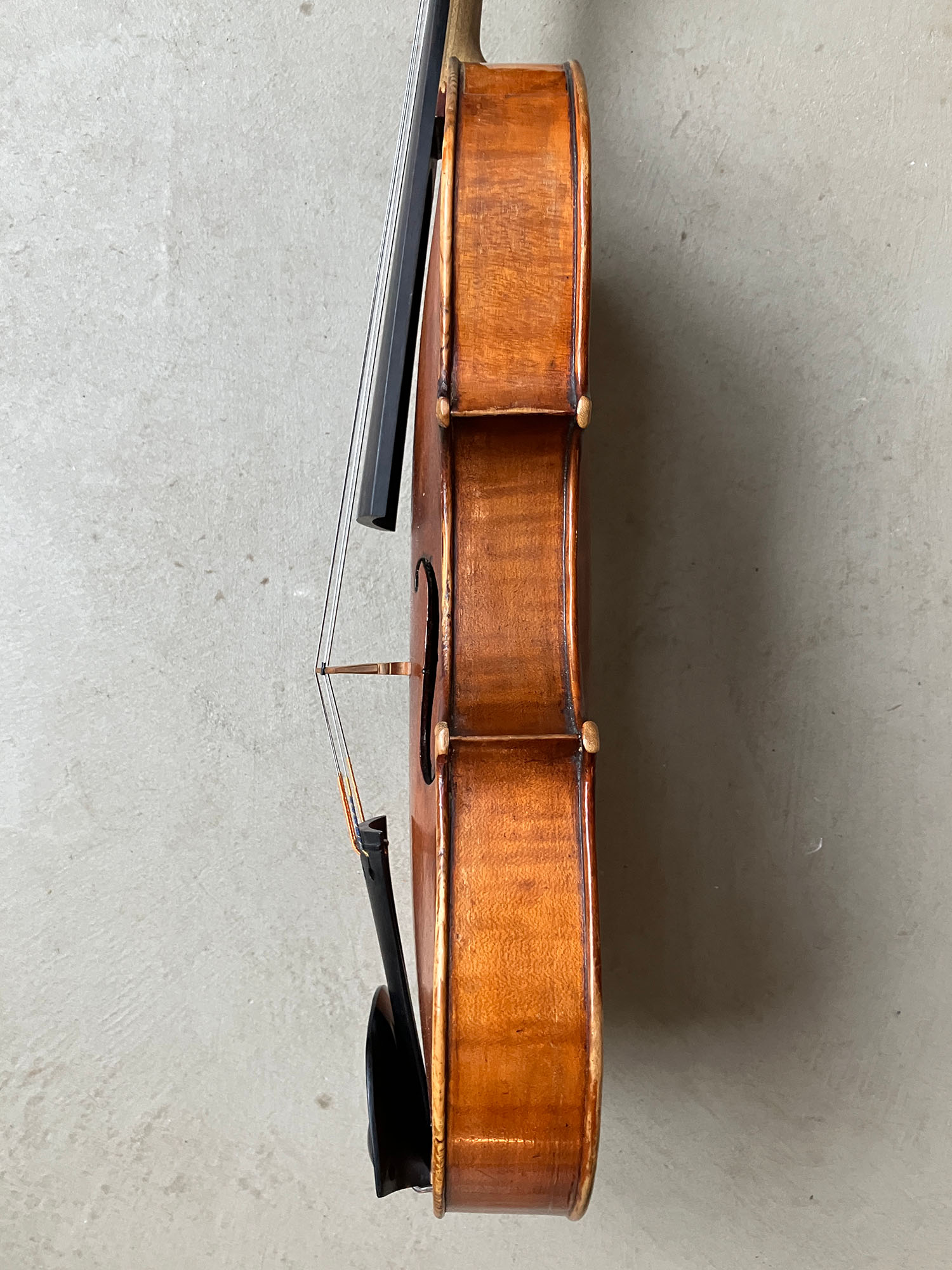
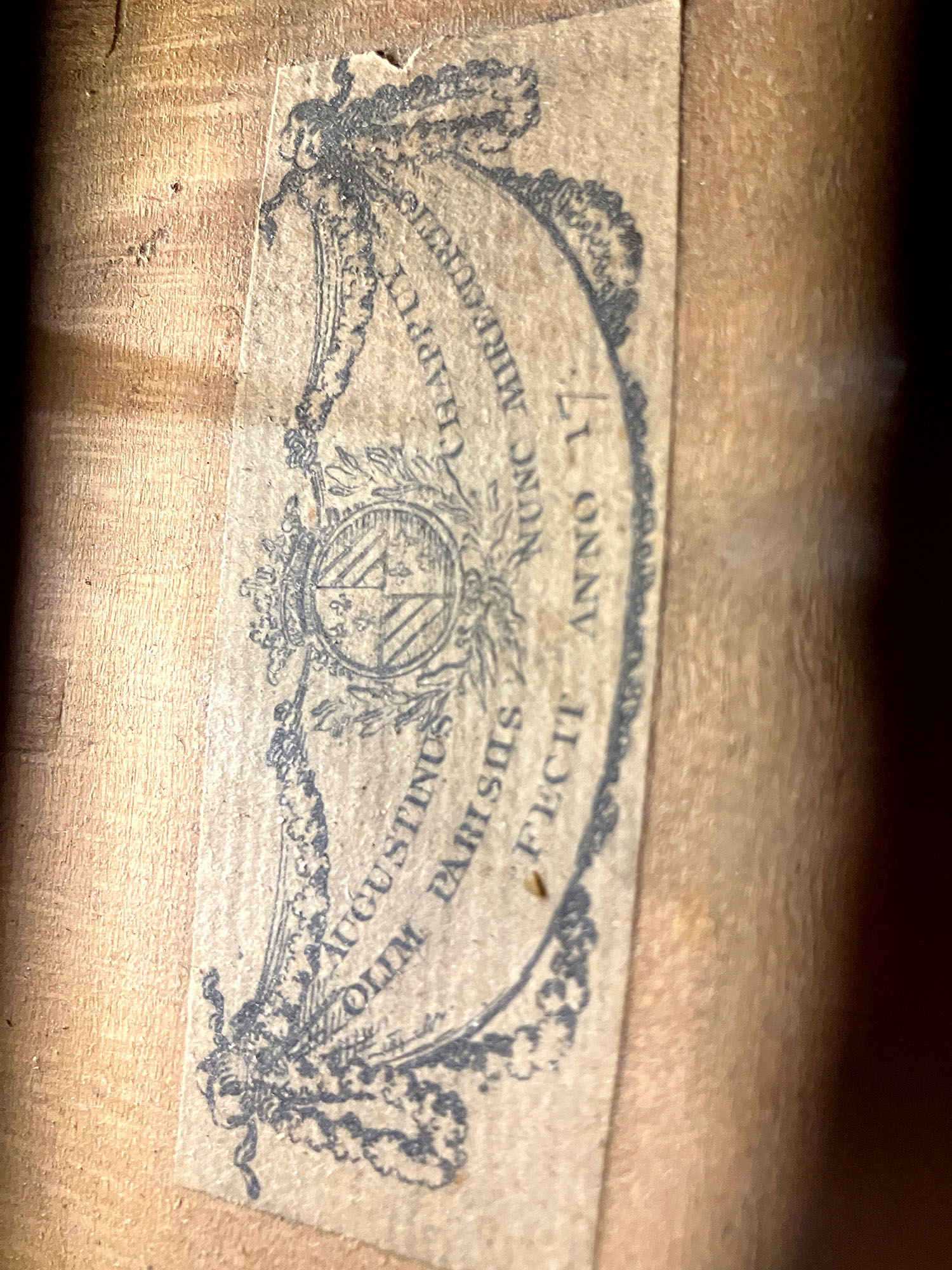
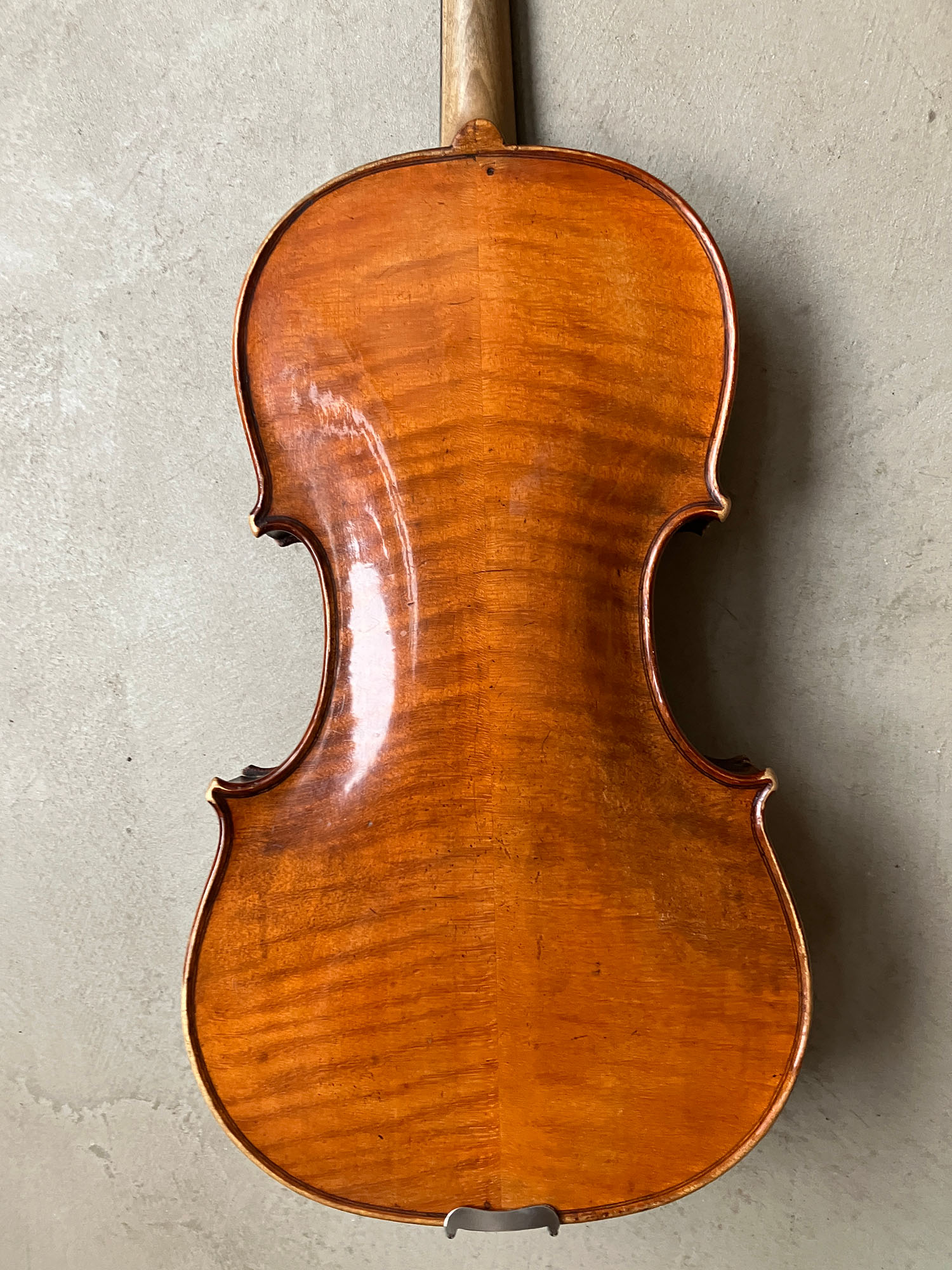
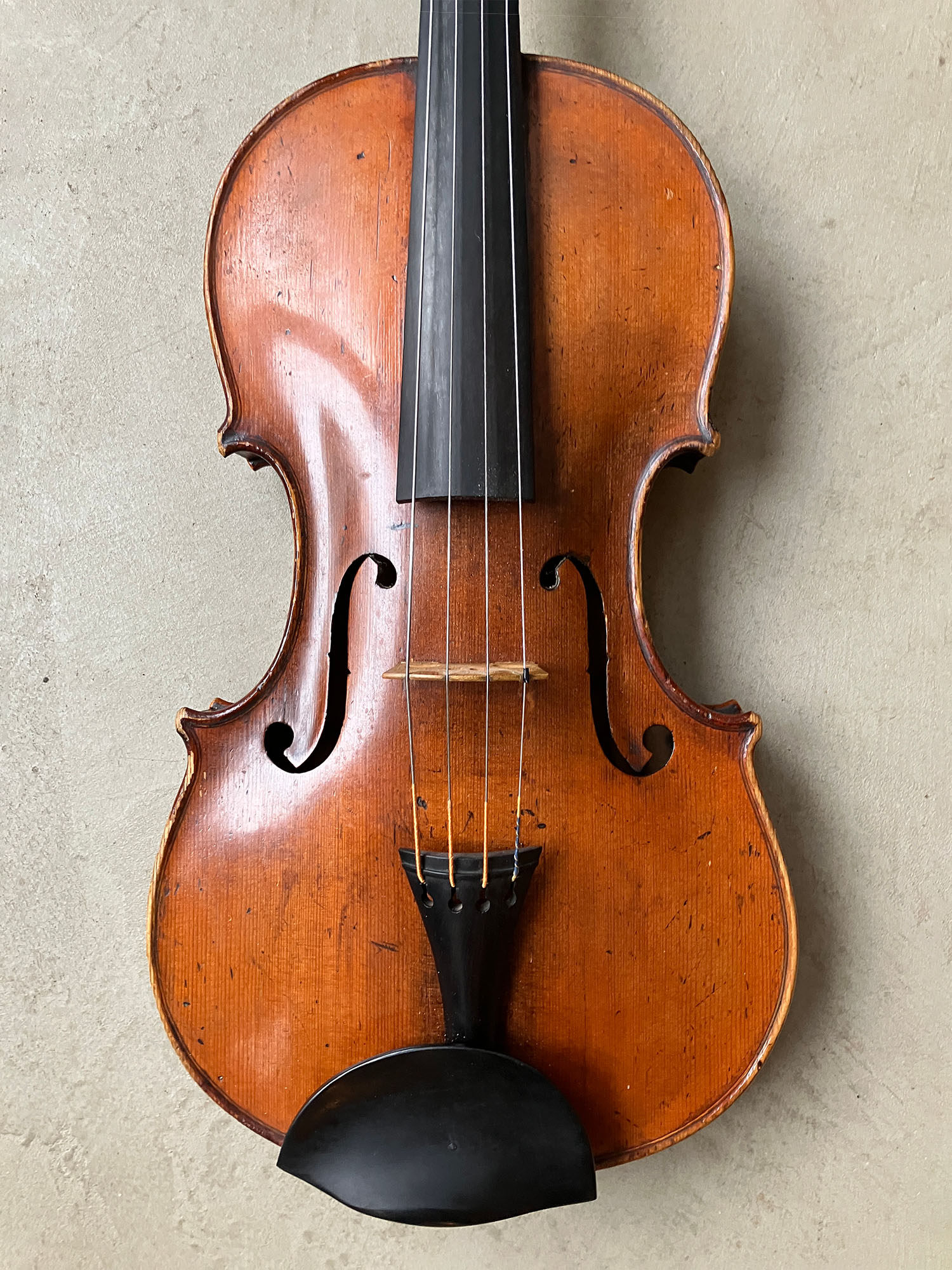
Viola, CHAPPUY Augustin, 1768
Viola made by Augustin CHAPPUY 1768. • Beautiful original instrument by the french maker, bearing original label, 409mm, superb condition
Price range: from €10 000 to €20 000

Visit to Catherine Janssens' workshop
‘Lumière en coulisses : les métiers de l’ombre – Episode 2 : Catherine Janssens – 21/12/2023’ from the RTBF podcast by CAUDRON François. Published in 2023.
Interview Queen Elisabeth Competition 2017
During the Queen Elisabeth Competition 2017, dedicated to the cello, Catherine Janssens shared her expertise on instrument making.

Lutherie Collectives: The Wisdom of Crowds
Violin making is traditionally a solitary career, so why are so many luthiers and bow makers choosing to join collectives? Peter Somerford talks to the founders and members of such groups around the world to discover the benefits of pooling resources, knowledge and time.

Acoustical properties of wood in string instruments soundboards and tuned idiophones: Biological and cultural diversity.
The acoustical properties of wood for instruments have mostly been studied on a few archetypal woods in Western musical instruments. The objective of this paper is to extend knowledge on the diversity in wood properties and uses in instruments from different geo-cultural areas. A wide set of data has been collected on vibrational properties of 452 species, through experiments and literature survey.
Property distributions within broad categories confirm the known characteristics of softwoods, but also evidence specificities of tropical hardwoods compared to temperate-zone species.
A relational database has been created to link wood properties and uses in musical instruments of the world. Two case studies on acoustically important functions in different geo-cultural areas show contrasted trends:
- species used for xylophone bars and slit-drums in different continents all share a very low internal friction,
- on the contrary, the only characteristic common to soundboards’ woods is a lower than average density, whereas their acoustical properties differ widely between them and with the “Western” standard in wood choice.
All these materials being nevertheless adapted to their context, cultural specificities in the structure, playing mode and “sonority” preferences should also be taken into account.VC 2012 Acoustical Society of America.